RBI Governor Shaktikanta Das and Finance Secretary Subhash Chandra Garg are also expected to attend the meetings.

Pakistan's skewed foreign reserves got a major boost after Saudi Arabia pledged an additional $3 billion in deposits while extending its existing $5 billion facility for a further three years.

For India, much is at stake: Crucial energy supplies traversing the Strait of Hormuz, the fate of its 10 million citizens living and working in West Asia -- who send generous remittances home -- and its major trade links with the region.

FM P Chidambaram is expected to address the IMF-WB's spring meeting on April 12 & 13 that is likely to be dominated by the impact of US recession, global inflation & consequent credit crunch leading to global economic slowdown. He is expected to take up India's concerns of rising global food & commodity prices, besides spiraling crude oil prices in the backdrop of domestic inflation, which has touched a 3-year high of 75%. India will take up hike in assistance issue with WB.

Finance Minister Nirmala Sitharaman on Tuesday met IMF managing director Kristalina Georgieva and discussed a range of issues, including impact of geopolitical situation on global growth.

Trump may strike. He may announce productive talks and extend again. He may do both at the same time. Iran will not open the Strait on someone else's terms, so no matter what happens, that problem will remain unsolved. And the IRGC will still be collecting its $2 million toll from every ship bold enough to ask permission to pass.

At the IMF, India is expected to link announcement of additional resources to the IMF to the implementation of 2012 quota reform.

The World Bank's executive board unanimously selected 63-year-old Malpass, who is currently Under Secretary of Treasury for International Affairs, as the bank's 13th President for a five-year term beginning April 9.
Finance Minister Jaswant Singh will not attend the spring meeting of International Monetary Fund and World Bank, starting in Washington on March 20.
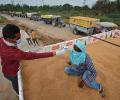
The World Bank on Tuesday projected India's economy to grow at 8.3 per cent in 2021 and 7.5 per cent in 2022, even as its recovery is being hampered by an unprecedented second wave of the COVID-19, the largest outbreak in the world since the beginning of the deadly pandemic. The Washington-based global lender, in its latest issue of Global Economic Prospects released here, noted that in India, an enormous second COVID-19 wave is undermining the sharper-than-expected rebound in activity seen during the second half of Fiscal Year 2020/21, especially in services.

Arvind Subramanian was appointed CEA in October 2014 and got a year's extension in September 2017

Buoyed by an increase in public investment and incentives to boost manufacturing, India's economy is expected to grow by 8.3 per cent in the fiscal year 2021-22, less than the previous projection early this year before the country was hit by the second wave of the COVID-19 pandemic, the World Bank has said in its latest report. World Bank chief economist for the South Asia Region Hans Timmer told PTI here that when one looks at the high frequency data, they see that as a result of the second wave of the COVID-19 pandemic, the recovery paused, and some indicate that the recovery actually declined briefly. "We project for this fiscal year 8.3 per cent (growth rate for Indian economy) that is less than we projected early in the year before the health crisis caused by the second wave. "Given the sharp contraction of the economy last year, it might not look like a lot, but in my view, that is actually very positive news, given the violent second wave and the severity of the health crisis," he said on Thursday.
Head of the United Nations International Labour Organisation has told the International Monetary Fund and the World Bank to join hands to combat global economic crisis. He said a multilateral consensus, on a wide range of issues ranging from widening income gaps to climate change bringing together rich and poor countries, employers and employees, is needed. IMF forecasts have projected that global growth could drop below the point that is equivalent to a global recession.

The global recovery is expected to be asynchronous and divergent between advanced and emerging market economies, the IMF said on Tuesday, noting that policymakers should take early action and tighten selected macroprudential policy tools while avoiding a broad tightening of financial conditions. "Extraordinary policy measures have eased financial conditions and supported the economy, helping to contain financial stability risks," the International Monetary Fund (IMF) said in its Global Financial Stability report released ahead of the Spring meeting of the global lender and the World Bank. However, actions taken during the pandemic may have unintended consequences such as stretched valuations and rising financial vulnerabilities, it said.

India too will advocate the IMF quote reforms at the two-day meeting of G20 Finance Ministers and Central Bank Governors beginning Saturday.

With India faced with high Current Account Deficit, FM has been visiting major global financial hubs like Japan, Germany, Hong Kong and Singapore, to project the country as a investment destination.
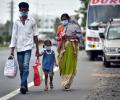
The year 2020 could see the worst global economic fallout since the Great Depression in the 1930s, with over 170 countries likely to experience negative per capita income growth due to the raging coronavirus pandemic, IMF Managing Director Kristalina Georgieva said on Thursday. Georgieva made the remarks during her address on 'Confronting the Crisis: Priorities for the Global Economy' in Washington, DC, ahead of next week's annual spring meeting of the International Monetary Fund and the World Bank.
International Monetary Fund has warned emerging markets, which have so far weathered the ongoing financial crisis, that they may not be completely insulated, while noting that risks to India's financial sector appeared manageable. The top international organisation has raised the assessment of market risks for the emerging markets including on capital flows. It said that despite generally strong external positions, some concerns have arisen about dollar funding in Asia.

The IMF on Tuesday projected an impressive 12.5 per cent growth rate for India in 2021, stronger than that of China, the only major economy to have a positive growth rate last year during the COVID-19 pandemic. The Washington-based global financial institution, in its annual World Economic Outlook ahead of the annual Spring meeting with the World Bank, said the Indian economy is expected to grow by 6.9 per cent in 2022. Notably in 2020, India's economy contracted by a record eight per cent, the International Monetary Fund (IMF) said as it projected an impressive 12.5 per cent growth rate for the country in 2021.

Raghuram Rajan said a six-member monetary policy committee will decide on interest rates.

Shaktikanta Das said in Washington, DC, that there was nothing sacrosanct about the 25 bps rate cut and that monetary policy could be well served by calibrating the size of the policy rate to the dynamics of the situation, and the size of the change itself could convey the stance of policy.

Taking up the case of Indian IT companies and professionals, Jaitley told Ross about the contribution of highly-skilled Indians in the economic development of the United States and India and stressed that they should continue to do so, which is in the best interest of the two countries, officials said.

'Reports in a section of media regarding Union Minister Shri Arun Jaitley's health condition are false and baseless. Media is advised to stay clear of rumour mongering,' Government Spokesman Sitanshu Kar tweeted.

India's growth, he said, remains resilient with low inflation, fiscal prudence and low current account deficit, talking about robust structural reform measures.
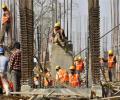
India's economy has bounced back amazingly from the Covid-19 pandemic and nationwide lockdown over the last one year, but it is not out of the woods yet, according to the World Bank, which in its latest report has predicted that the country's real GDP growth for fiscal year 21/22 could range from 7.5 to 12.5 per cent.

The members resolved to foster a global economic governance architecture that is more effective and reflective of current global economic landscape
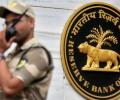
The Reserve Bank of India on Wednesday retained the economic growth projection for the current financial year at 10.5 per cent, while cautioning that the recent surge in COVID-19 infections has created uncertainty over the economic growth recovery. In its last policy review, the RBI had projected a GDP growth rate of 10.5 pc for FY'22. Taking various factors into consideration, it said, "the projection of real GDP growth for 2021-22 is retained at 10.5 per cent consisting of 26.2 per cent in Q1, 8.3 per cent in Q2, 5.4 per cent in Q3 and 6.2 per cent in Q4."

India has expressed concern over the hike in visa fee by the US, saying it is "discriminatory" and largely affects Indian IT professionals.

In the four-paragraph letter, Jaitley said he had orally informed Modi about his desire not to be a part of the new BJP government to enable him to concentrate on treatment and health.
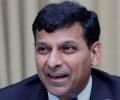
There is also a lobby within the bureaucracy that wants to see Rajan's influence curtailed
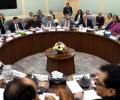
India's likely medium-term potential growth will almost certainly be markedly lower than that experienced in pre-pandemic years, warns Shankar Acharya, former chief economic advisor to the Government of India.

It is a wonder how pervasive and long-lasting the damage can be from a balance-sheet crisis, says Suman Bery.
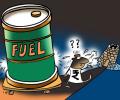
The country must get its act on global alliances right in order to feed its fuel-hungry economy, points out Subhomoy Bhattacharjee.

Democracies avoid serious political turbulence only so long as they ensure that the relative level of inequality between the rich and the poor does not become excessively large, says Vice President M Hamid Ansari.
 © 2026 Rediff.com - Advertise with us - Disclaimer - Privacy Policy - Sitemap - Feedback - About us - Terms of use - Grievances